November 2025.
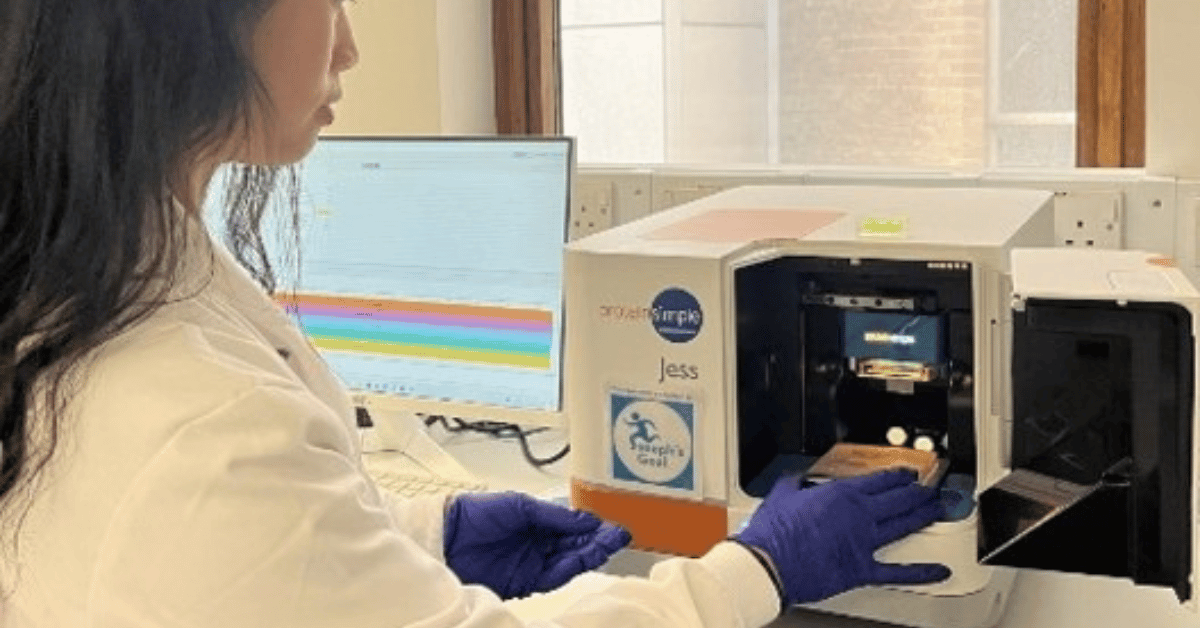
We’re pleased to share the latest update from the research team at UCL, where Joseph’s Goal funding continues to support work into Non-Ketotic Hyperglycinemia (NKH).
The overall message is encouraging. Researchers say it has been a very active year in the lab, with progress being made in several different areas.
Their work continues to focus on two main goals: understanding NKH better and developing new treatments that could make a real difference for affected children and families.
1. Gene therapy to deliver a working copy of the GLDC gene
One of the most promising areas of progress is gene therapy for GLDC-related NKH.
In simple terms, researchers are working on ways to deliver a healthy copy of the faulty gene into the body. Particularly in the brain, where NKH causes its main problems.
The report says this approach has already shown positive results in the NKH mouse model. Researchers have been able to lower glycine levels and improve other important markers in the brain.
They are also testing whether this treatment can help with epilepsy sensitivity and other neurological symptoms.
The team says plans are now well developed for the next stage of work needed before a clinical trial could be authorised, subject to further safety testing and funding.
2. Liver-targeted gene therapy
The team is also exploring a second type of gene therapy aimed at the liver. This approach is designed to insert the GLDC gene into the liver in a way that stays in place as the liver grows, which could make it a useful longer-term treatment option.
According to the update, this project has now moved into another round of safety testing, showing that work is continuing to move forward.
3. mRNA therapy
Another exciting area being explored is mRNA therapy.
mRNA is a natural messenger used by the body to carry instructions to cells.
In this case, researchers are looking at whether it could be used to help deliver the instructions needed to make the GLDC protein.
The update explains that the team has completed an early pilot project and tested different delivery methods in mice.
The next step is to use the best-performing option with GLDC RNA itself. This is still at an earlier stage, but it represents another hopeful route being investigated.
Progress on other forms of NKH
As well as treatments linked to GLDC, researchers are also developing an AMT-directed gene therapy for children whose NKH is caused by changes in the AMT gene.
The team has already created and tested the vectors in cells, and an important next step is choosing the best mouse model to test the treatment further.
Alongside gene-based treatments, the team is also continuing to study nutrients and other compounds that may help reduce the effects of NKH.
These include approaches already identified in earlier work, as well as new possibilities now being tested in cells and mice.
Understanding NKH more deeply
Just as importantly, the team is continuing to build its understanding of how NKH affects the body.
They are using mouse models, cells and organoids to study the condition in more detail.
This helps researchers understand what is happening inside the body. It also gives them better ways to test whether future treatments are working.
A hopeful step forward
There is still a long way to go.
However, this latest update shows that Joseph’s Goal is helping to fund research that is active, ambitious and moving forward on several fronts at once.
Every fundraiser, every donation and every show of support is helping to keep that progress going.